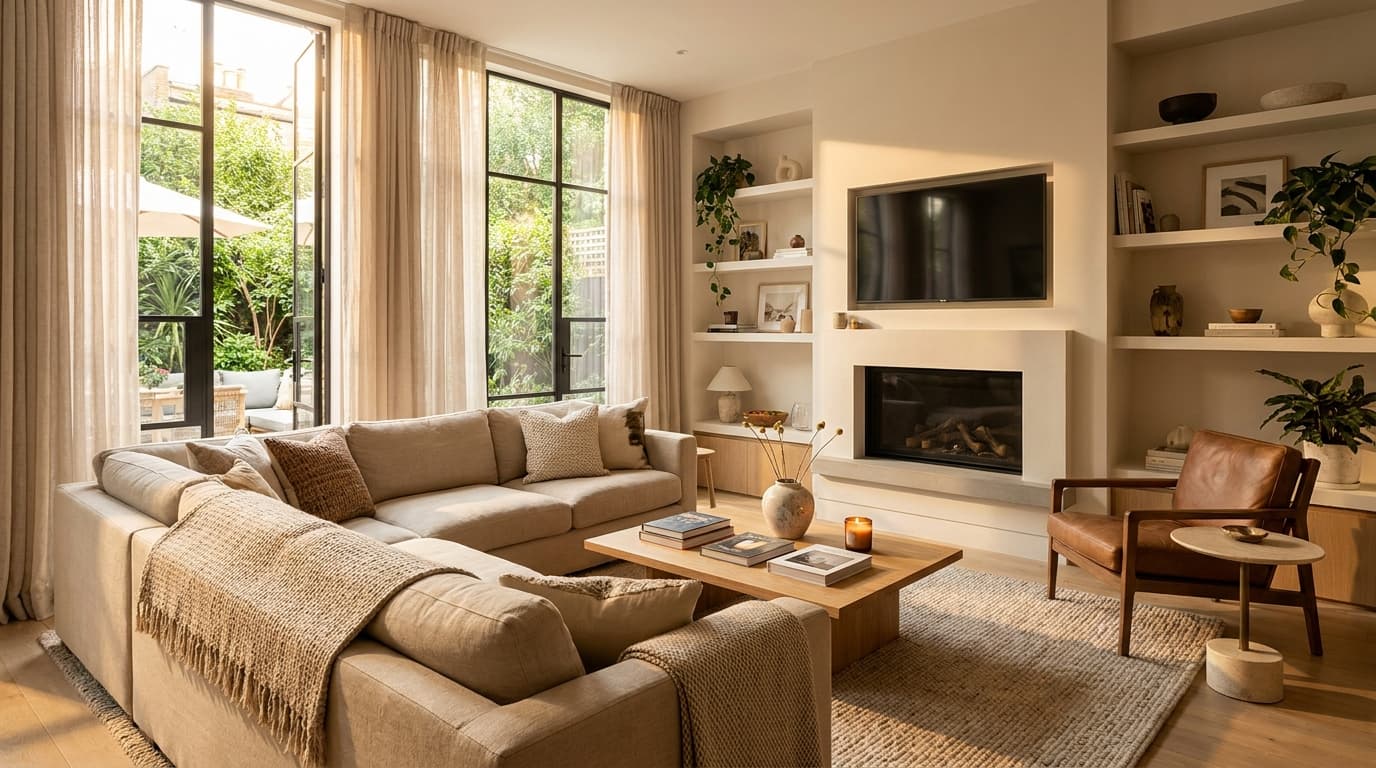
Professional Airbnb photos run $200-500 in most markets. For a host doing $2,000/month in revenue, that feels like a real decision. For a host doing $800/month, it might feel like a luxury. I've audited hundreds of listings, and the honest answer is: it depends on a few specific things, and I'll tell you exactly what they are.
What Professional Airbnb Photography Actually Costs
Prices vary a lot by market and photographer experience. Here's what I see hosts paying:
- Budget end ($150-250): Photographers who shoot real estate on the side. You'll get properly exposed, wide-angle shots but not much staging help or editorial eye.
- Mid-range ($300-450): Dedicated short-term rental or real estate photographers who understand Airbnb. This is the sweet spot for most properties.
- High end ($500-1,000+): Boutique photography studios, drone shots, twilight photography, virtual staging. Worth it for luxury properties or large cabins where one long weekend booking covers the cost.
Airbnb used to offer free professional photography through a partner program. They quietly wound that down, but some markets still have it available. Check before you book anyone.
Before and After: What the Booking Data Shows
I'll give you three real examples from listings I've worked with.
Example 1: 2-bedroom condo in Phoenix The host was using iPhone photos shot in the middle of the day with harsh window glare. Occupancy was sitting around 48%. After a $350 professional shoot, occupancy jumped to 71% over the next 60 days. The photographer also suggested removing a bulky armchair that was making the living room look cramped. That single change mattered as much as the camera.
Example 2: Studio apartment in Chicago This host already had decent lighting in their photos, but the angles were wrong. Everything looked smaller than it was. A $280 shoot brought occupancy from 61% to 74% and let the host raise nightly rates by $18 because the place finally looked like it was worth more. That's roughly $400-500 in added monthly revenue from a one-time cost.
Example 3: Cabin in the Smoky Mountains This one is interesting. The host had mediocre photos and was still at 89% occupancy because the Smokies are just that popular. Professional photos helped him raise rates by $30/night without losing bookings, but the occupancy itself barely moved. The market was doing the work.
The pattern I see: professional photos close the gap between what your property is worth and what guests think it's worth based on first impressions. In competitive urban markets, that gap is expensive. In high-demand leisure markets, the bigger win is often rate optimization, not more bookings.
When iPhone Photos Are Good Enough
I'm going to be honest here because most hosts won't tell you this: good iPhone photos beat bad professional photos every time.
If you have a newer iPhone (12 or later) and you understand basic composition and lighting, you can produce photos that convert well. I've seen iPhone listings outperform professional shoots because the host knew what they were doing and the photographer the competitor hired clearly didn't.
iPhone photos are genuinely good enough when:
- Your property is small (studio or 1-bedroom) and doesn't have many rooms to shoot
- You have great natural light and can shoot on a cloudy bright day between 10am and 2pm
- You're in a market where your competition also has average photos (check this before deciding)
- Your nightly rate is under $100 and the math on a $350 photography investment takes too long to work out
iPhone photos are NOT good enough when:
- You're competing against professional listings in a saturated market
- Your property has features that are genuinely impressive (high ceilings, great views, luxury finishes) but the current photos don't show it
- Your occupancy is under 50% and you've ruled out pricing and title as the problem
What to Look for in a Photographer
Not every photographer who shoots real estate is good at Airbnb photography. They're related but different.
Real estate photography is optimized for MLS listings: wide, bright, neutral, fast. Airbnb photography needs to sell a feeling. The bedroom photo that works for a real estate listing (bed centered, symmetrical, nothing personal) doesn't necessarily make someone want to book a vacation there.
When you're vetting photographers:
- Ask to see their Airbnb or vacation rental portfolio specifically, not just their real estate work
- Look at whether the photos make the spaces feel inviting or just accurate
- Ask if they do any light staging (moving throw pillows, adding props, turning on lamps). Good STR photographers do this as a matter of course.
- Check if they deliver edited finals within 48-72 hours. Turnaround matters if you're trying to update a live listing.
One thing I tell hosts: look at the top 5 listings in your market on Airbnb. If they all have professional photos and yours don't, that's your answer.
DIY Photography Tips That Actually Work
If you're going the iPhone route or want to maximize a professional shoot by doing some prep work, here's what actually moves the needle.
Lighting is everything. Shoot on an overcast day. It sounds counterintuitive but direct sunlight creates harsh shadows and blows out windows. An even cloudy sky gives you soft, flattering light throughout the space. Turn on every single light in the room even during daytime.
Shoot from corners. Positioning yourself in a corner and shooting diagonally across a room makes the space look significantly larger. Most hosts shoot from the middle of the wall opposite and wonder why everything looks small.
Declutter more than you think you need to. Remove everything from counters except 2-3 intentional items. Take the dish rack off the kitchen counter, hide the toilet brush, remove the Costco-sized bottle of dish soap. Guests don't mentally subtract clutter when they see photos. They just feel like the space is messier than it is.
Hero shot first. Your cover photo should be the single most impressive thing about your property. View from the deck, the beautifully styled living room, the pool. Not the front of the building, not the bed against a plain white wall.
Photo Editing Basics
Whether you shoot yourself or hire someone, the editing matters. A few things:
Brightness and exposure should make the space look like it does at its best, not artificially brighter than reality. Guests who arrive and find the place darker than the photos leave frustrated reviews. Edit to "best version of reality," not a fantasy.
For iPhone photos, Lightroom Mobile (free version) gives you much more control than the built-in editor. Bump exposure slightly, reduce highlights to recover window detail, and add a touch of warmth. That's most of what you need.
Vertical lines should be straight. Tilted walls and converging verticals make photos look amateurish. Lightroom has a geometry correction tool that fixes this in one click.
Don't over-filter. The heavy preset look (everything orange and hazy) might work on Instagram but it makes Airbnb photos look cheap and dated.
The ROI Calculation
Here's a simple way to think about whether professional photography makes financial sense for your property.
Take your average nightly rate and your current occupancy percentage. Calculate monthly revenue. Now estimate what a 10-15% occupancy increase would add (that's a conservative improvement from professional photos in a competitive market). Compare that to the one-time cost of the shoot.
Example: $150/night average rate, 55% occupancy over 30 days = $2,475/month. A 12% occupancy increase gets you to 67%, which is $3,015/month. That's $540 added monthly revenue. A $350 photography investment pays for itself in less than one month and the photos last for years unless you do a major renovation.
The math rarely works against you in a reasonably competitive market. Where I see hosts hesitate is when occupancy is already above 85% (then rate optimization matters more than conversion) or when the property is genuinely hard to photograph well due to size or layout.
These numbers give you a framework, but they're based on averages. Your specific market, your niche, your current listing quality, and your competition all change the calculation.
If you want to know exactly where your listing is leaving money on the table, whether it's photos, your title, your description, or your pricing strategy, get a listing audit from STRAudits. For $49, you get a detailed report covering every part of your listing with specific recommendations, delivered within 48 hours. Most hosts find at least one thing they can fix immediately that more than covers the cost.