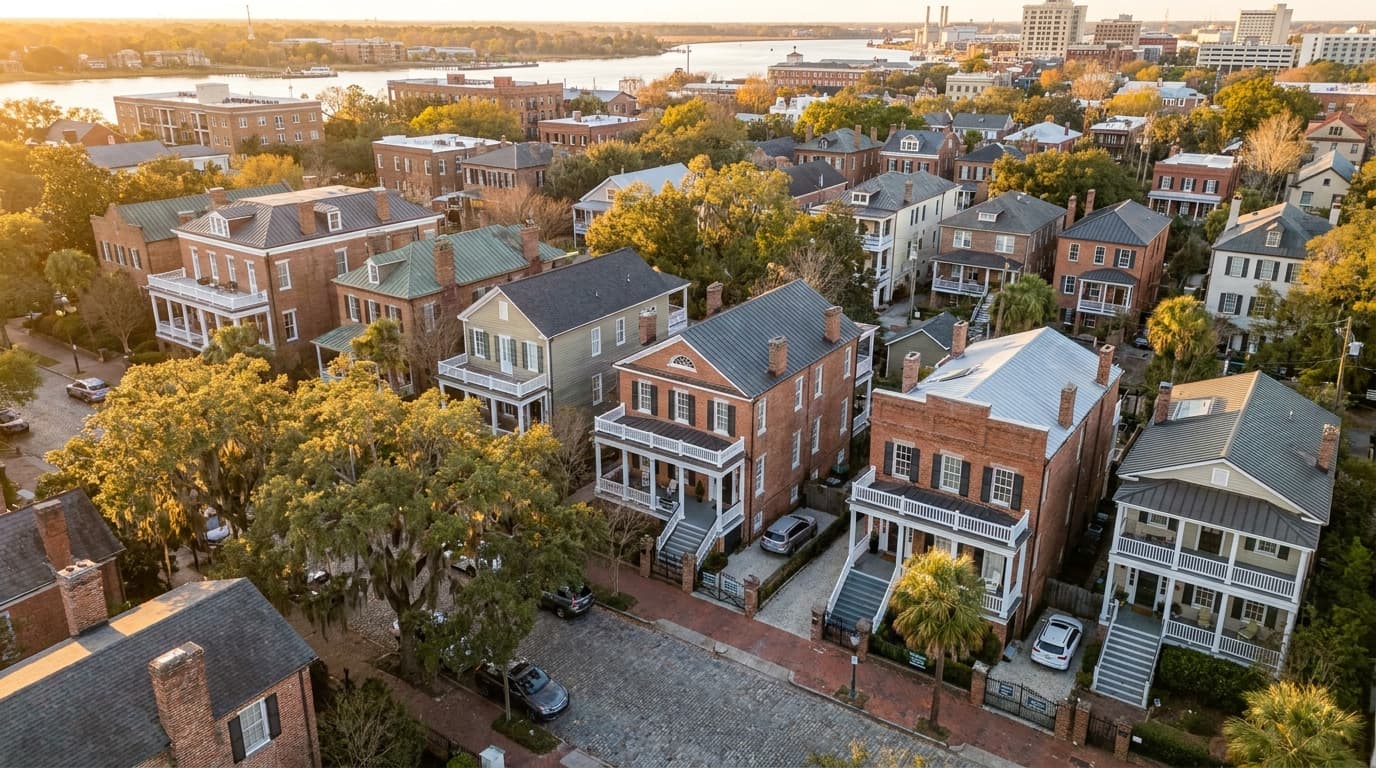
Savannah's Airbnb market is unlike most others. Your competition isn't just other vacation rentals — you're up against the romance of staying in a 200-year-old townhouse with original hardwood floors and stories that seep through the walls. Every listing in the Historic District has character, but most hosts don't know how to translate that charm into bookings.
After 12 years of hosting and managing 100+ properties, I can tell you the Savannah vacation rentals that succeed understand something the others miss: guests don't just want historic charm — they want to experience Savannah like locals do, with easy access to everything that makes this city special.
Understanding Savannah's Market Dynamics
The Savannah Georgia Airbnb market operates on pure location hierarchy. Properties within a 6-block radius of Forsyth Park command noticeably higher rates than identical properties even 10 blocks out. But here's what most hosts get wrong: they focus on being "historic" when guests actually book based on walkability.
Picture a beautiful 1850s townhouse on Bull Street competing with a smaller carriage house near City Market. The carriage house can easily be the one that stays booked. Why? It's three blocks from River Street and two blocks from the best restaurants on Broughton Street.
Savannah guests fall into three categories:
Weekend warriors (Friday-Sunday bookings): They want nightlife access. River Street proximity matters more than architectural details. Typical stay: a weekend, budget: $180-250/night.
Week-long explorers (Sunday-Friday stays): They want the full Southern experience. These guests read every word of your listing and book properties with detailed neighborhood descriptions. Typical stay: most of a week, budget: $120-180/night.
Event-driven visitors (SCAD graduation, wedding season, holidays): They book 3-6 months ahead and pay premium rates for specific dates. Budget: $250-400/night during peak events.
Writing Southern Charm Into Your Listing Copy
Generic listing descriptions kill bookings in Savannah. Guests expect storytelling, not a laundry list of amenities. But there's a difference between effective charm and tourist-trap cheese.
Here's what doesn't work: "Step into a bygone era in our historic mansion where Southern hospitality meets modern comfort!"
Here's what does: "Built in 1847 by cotton merchant William Harris, this Bull Street townhouse still has the original heart pine floors where three generations of his family walked. The kitchen overlooks the same courtyard garden his wife Mary planted in 1852."
Notice the difference? Specific names, specific dates, specific details. Guests want to feel like they're staying somewhere with real history, not a themed hotel room.
Your listing description should paint a picture of the guest experience:
"Walk out the front door and you're 30 seconds from the coffee shop locals have been going to since 1978. Turn right on Bull Street for a 4-minute walk to Forsyth Park's Saturday farmers market. Turn left for a 6-minute walk to Leopold's Ice Cream — the same recipes they've used since 1919."
Specific walking directions like these make a listing feel personal. Guests don't just want to know what's nearby — they want to feel like they have an insider's guide.
Master the Walking Distance Strategy
Strong Savannah STR listings mention walking distances in minutes, not blocks or miles. But you need to be strategic about which destinations you highlight.
Most hosts list the obvious tourist spots: River Street, City Market, Forsyth Park. Smart hosts mention the places that make guests feel like locals:
- The Grey (upscale dining in a restored Greyhound station)
- Ordinary Pub (where locals actually drink)
- Brighter Day Natural Foods (where residents shop)
- Starland District (where SCAD students and young professionals hang out)
Here's the walking distance formula that works:
"You're a 3-minute walk to [local favorite restaurant], 7 minutes to [major attraction], and 12 minutes to [tourist hotspot]. The closest coffee shop [name of actual place] is literally around the corner."
Don't just list distances — explain the route: "Head down our quiet residential street, past two of Savannah's most photographed houses, then turn onto busy Broughton Street where all the action happens."
The key insight: guests want to feel like they're staying in a real neighborhood, not a tourist bubble.
Timing SCAD Events and Seasonal Demand
Savannah College of Art and Design drives significant demand spikes that most hosts completely miss. SCAD's academic calendar should dictate your pricing strategy and booking policies.
SCAD Graduation (May): Rates jump 200-300% for the graduation weekend. But here's what most hosts don't know — family bookings start the Wednesday before and run through the following Tuesday. A 3-night minimum during this week will cost you bookings. Smart hosts set a 5-night minimum and still fill up.
Parent Weekend (October): Less obvious but equally profitable. Rates increase 150-200%, and these guests book 4-6 months ahead. They want upscale properties within walking distance of campus.
Portfolio Reviews (December and April): Art students' families visit for final presentations. These are typically shorter stays (2-3 nights) but command premium pricing.
Summer Session (June-August): SCAD runs limited summer programs, which means fewer students but more tourists. Adjust your messaging accordingly — less "convenient to campus," more "escape to historic Savannah."
Beyond SCAD, Savannah's seasonal patterns are predictable:
St. Patrick's Day (March 17): The city turns into chaos. If your property is within 10 blocks of the parade route, you can charge $400-500/night but expect potential property damage. Many successful hosts actually close their listings this weekend.
Wedding Season (April-May, September-October): Savannah is a hugely popular wedding destination, and peak-season weekends are packed with weddings. Wedding guest bookings are gold — they're less price-sensitive and often book multiple properties for the same dates.
Summer (June-August): Tourist season but brutally hot. Emphasize your air conditioning in photos and descriptions. Guests from cooler climates often underestimate Savannah's humidity.
Photography Strategy for Historic Properties
Most Savannah hosts make the same photography mistake: they shoot their property like a museum instead of a home. Guests want to see the historic details, but they need to imagine themselves living there.
Here's what works for historic property photography:
Lead with the money shot: Your first photo should be the most dramatic architectural element — the spiral staircase, the 12-foot ceilings, the original marble fireplace. But include modern elements that show functionality. A restored 1800s parlor with contemporary seating tells the right story.
Show the light: Historic Savannah properties often have incredible natural light through tall windows. Shoot during the golden hour when light streams through those original panes. Skip the nighttime "mood lighting" photos — guests want to see what the space actually looks like.
Include the street view: Savannah guests care deeply about the neighborhood vibe. Show your property's facade, the tree-lined street, neighboring historic homes. A street view photo helps guests visualize the exact location.
Detail shots matter: Original hardwood floors, restored crown molding, antique doorknobs — but pair each historic detail with a modern comfort. Show the clawfoot tub next to the heated towel rack. Show the original brick wall next to the 65-inch smart TV.
Don't hide the quirks: Historic properties have character, which sometimes means low doorways, uneven floors, or smaller bathrooms. Show these honestly. Guests would rather know upfront than be surprised. Misleading photos cost you more in bad reviews than honest ones cost you in bookings.
Weekend vs Weekday Pricing Strategy
Savannah's pricing patterns flip the typical vacation rental model. While most markets see higher weekend rates, Savannah's optimal strategy is more nuanced.
Weekend rates (Friday-Sunday): These should be your premium rates, but not your highest. Weekend guests are often locals from Atlanta or Charleston looking for a quick getaway. They're price-sensitive and compare options carefully. A moderate weekend premium usually works better than doubling or tripling your weekday rate, which many hosts attempt.
Weekday rates (Monday-Thursday): This is where you capture business travelers, longer vacation stays, and the mid-week wedding guests. Set these as your base rates and optimize for occupancy over premium pricing.
The Sunday-Thursday strategy: Some Savannah hosts offer "stay 4 nights, get the 5th free" packages for Sunday-Thursday bookings. This captures the week-long explorer segment and helps fill during traditionally slower periods.
Event-based surge pricing: During SCAD graduation or major wedding weekends, throw out the normal weekend/weekday split. These are true seller's market situations where demand far exceeds supply.
Here's a hypothetical example: a Historic District townhouse pricing weekends at $280/night and weekdays at $140/night might adjust to $220/night weekends and $160/night weekdays, with minimum stay requirements during high-demand periods. The narrower gap makes weekdays easier to fill without giving up the weekend premium.
The Details That Book Properties
Small touches separate memorable Savannah listings from forgettable ones. These details consistently drive bookings:
Local guidebook: Not a generic tourist brochure, but a personally curated list of recommendations. Include the hole-in-the-wall restaurants, the best times to visit popular spots, and the locals-only secrets. A tip like "the best biscuits in Savannah are at Maple Street Biscuit Company at 8 AM on weekdays when they're still warm" is exactly the kind of detail guests remember and mention in reviews.
Parking clarity: Savannah's parking situation is complex. Don't just say "parking available" — explain exactly where, exactly how much, and exactly how it works. Street parking, private spots, nearby garages — be specific because guests will be.
Historic context cards: Short, one-page stories about your property's history placed in each room. Guests love sharing these details on social media, which creates free marketing for your listing.
Temperature management: Historic properties can have uneven heating and cooling. Provide fans, extra blankets, and clear instructions for managing the climate. Guests will forgive quirky HVAC if they feel prepared for it.
The hosts who consistently outperform their competition understand that Savannah guests aren't just booking a place to sleep — they're booking an experience that lets them live like a local in one of America's most beautiful historic cities.
These strategies work for most Savannah properties, but every listing has unique challenges and opportunities. A Bull Street mansion needs different optimization than a Starland District loft, and a property near SCAD requires different positioning than one in the Victorian District.
If you want specific recommendations tailored to your exact location, property type, and target guests, get a professional audit from STRAudits. For $49, you'll get detailed analysis of your title, photos, description, and pricing strategy — all customized for the Savannah market and delivered within 48 hours.