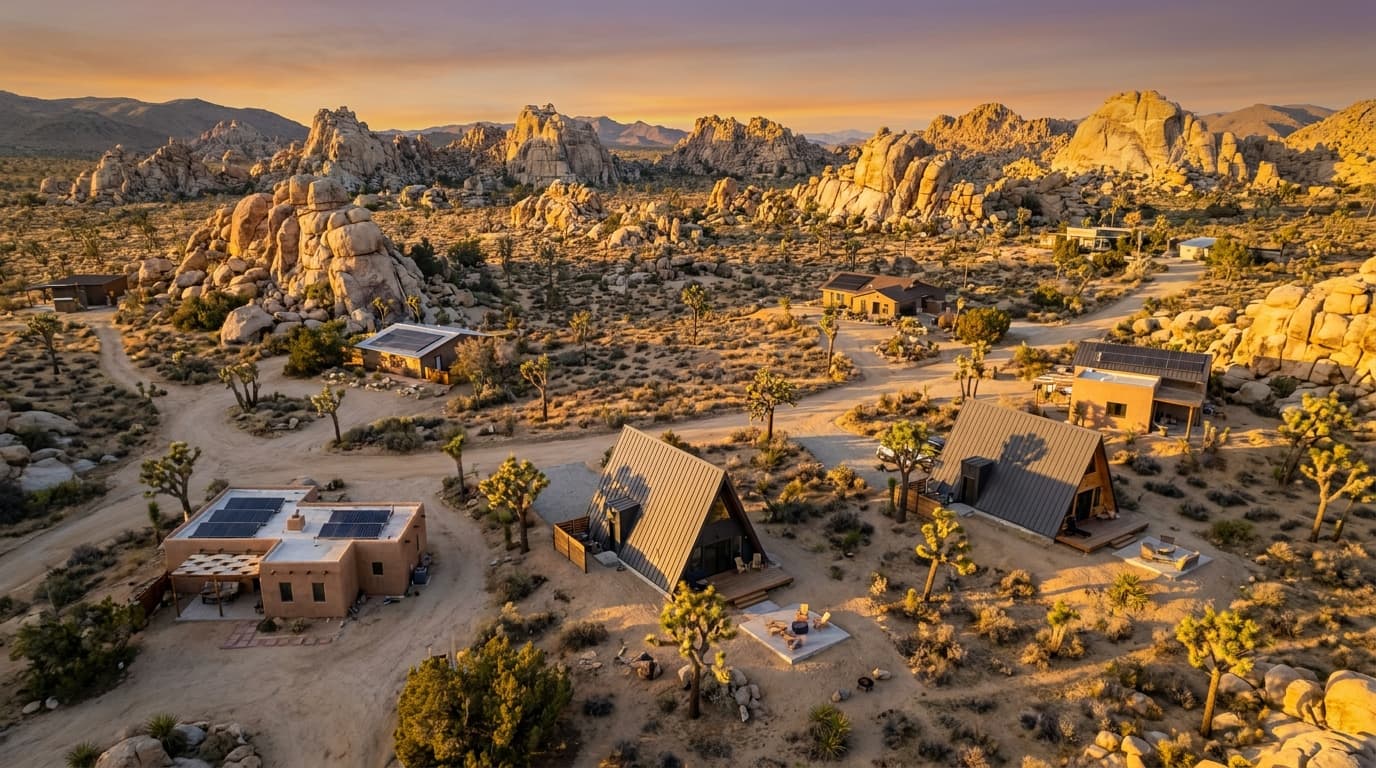
Your Joshua Tree vacation rental isn't competing with hotels or typical Airbnb properties. You're competing with Instagram posts, bucket lists, and lifelong dreams. Guests don't book Joshua Tree for the thread count or WiFi speed — they book for sunrise over the desert, for silence so complete they can hear their own heartbeat, and for night skies that make city dwellers question everything they thought they knew about darkness.
Browse Joshua Tree Airbnb listings and you'll see hosts make the same mistake repeatedly: they market their property like it's in downtown Phoenix instead of one of the most mystical landscapes in America. The hosts who understand this difference are booked solid at premium rates.
Joshua Tree's Unique Market Appeal
Joshua Tree National Park draws 3 million visitors annually, but most stay in hotels 30-60 minutes away in Palm Springs or Twentynine Palms. Your guests are choosing to stay in the desert specifically for the experience — proximity to the park, incredible stargazing, and that otherworldly Joshua Tree landscape.
The market breaks into three distinct guest types:
Weekend Warriors from LA/San Diego: They drive out Friday evening and leave Sunday afternoon. These guests pay premium rates for convenience and unique experiences. They want fire pits, outdoor showers, and photography-worthy spaces.
National Park Tourists: Multi-day visitors exploring the park extensively. They prioritize location — being within 10 minutes of park entrances commands a rate premium. They need practical amenities like good parking, early check-in options, and detailed local guides.
Retreat Groups and Creatives: Artists, yoga groups, corporate retreats seeking inspiration in the desert. They book longer stays, often midweek, and value unique architecture and spaces for gathering.
Experience-Driven Listing Copy
Your listing title shouldn't mention bedrooms or bathrooms first. It should sell the experience.
Weak: "3BR/2BA Desert Home Near Joshua Tree" Strong: "Stargazing Haven with Fire Pit & Outdoor Shower - Walk to Park"
Your description needs to paint the picture of their perfect desert day. Here's the framework I use for successful Joshua Tree listings:
Morning: How will they wake up? "Wake to sunrise painting the desert rocks golden, visible from your king bed through floor-to-ceiling windows."
Day: What makes your location special? "Two miles from the park's west entrance — you'll be hiking Hidden Valley while other tourists are still stuck in entry traffic."
Evening: The magic hour copy sells bookings. "As darkness falls, our fire pit becomes your front-row seat to the Milky Way — no light pollution for 50 miles in any direction."
Compare a description that lists amenities with one that describes the guest experience. Instead of "Hot tub available," try: "Soak under a canopy of stars in our hot tub — on clear nights, you'll see satellites tracking across the sky."
Stargazing and Outdoor Amenity Photography
Joshua Tree guests book based on fantasy, and your photos need to deliver that fantasy. The mistake most hosts make is taking photos during golden hour for pretty lighting. That's backwards for Joshua Tree.
Your hero photo should be taken during blue hour (30 minutes after sunset) showing your property lit up against the dark desert sky. This immediately communicates "desert escape" and "stargazing destination."
Essential shots for every Joshua Tree listing:
- Night sky photo from your property — Use a 15-30 second exposure to capture stars above your fire pit or hot tub
- Sunrise/sunset from guest spaces — Shoot through windows or from patios where guests will actually sit
- Outdoor shower with desert backdrop — Nothing says "desert luxury" like an outdoor shower
- Fire pit setup at dusk — Stage it with chairs, blankets, maybe s'mores supplies
- Wide shots showing Joshua Tree landscape — Guests need to see they're truly in the desert, not just a house with some cacti
A photo set that emphasizes nighttime and outdoor experiences over interior shots supports higher rates than one that looks like any other rental.
The biggest photo mistake is shooting everything during daytime. Your competition (hotels in Palm Springs) has nice daytime photos. Your advantage is showing what they can't offer: true desert immersion.
Unique Architecture as a Selling Point
Joshua Tree attracts architects, designers, and Instagram influencers. If your property has unique design elements, they're worth more than traditional amenities.
Desert modern elements that command premium rates:
- Floor-to-ceiling windows facing the desert
- Concrete or adobe construction
- Flat roofs for stargazing access
- Indoor/outdoor living spaces
- Natural materials (stone, wood, metal)
- Minimalist design that highlights the landscape
Even modest properties can emphasize desert-appropriate design. A host with a basic ranch house might highlight a "mid-century modern renovation with original terrazzo floors and walls of glass opening to desert views."
If your property lacks architectural interest, create it through staging and photography. Use natural textures, warm lighting, and furniture that complements rather than competes with the desert landscape.
The key is authenticity. Joshua Tree guests can spot fake "desert vibes" immediately. A cactus in a pot doesn't make your suburban house feel like a desert retreat.
Weekend Warrior Pricing Strategy
Joshua Tree's demand pattern is extreme: weekends book at 2-3x weekday rates, but weekdays often sit empty. Understanding this pattern is crucial for revenue optimization.
Peak periods (charge premium rates):
- Friday-Sunday year-round (except July-August)
- Full moon weekends (stargazing is still good, plus moon illuminates landscape)
- October-April holidays and long weekends
- Coachella weekends (April) — even though it's in Indio, Joshua Tree gets overflow
Strategy that works: Price weekends high and weekdays low. Let Friday-Sunday bookings carry most of your annual revenue, then use Monday-Thursday as nearly break-even rates to attract longer stays.
Example pricing structure:
- Sunday-Thursday: $150/night (covers costs, attracts longer stays)
- Friday-Saturday: $400-500/night (where profit happens)
- Holiday weekends: $600-700/night
This approach fills the calendar and maximizes revenue. Guests planning weekend trips will pay premium rates, while extended-stay guests get attractive weekday pricing.
Heat Season Off-Peak Optimization
July and August are brutal in Joshua Tree — daytime temps hit 110°F+ regularly. Most hosts see this as dead time, but smart positioning can maintain decent occupancy even in peak summer.
Summer positioning strategies:
Target heat-seekers: Market to Scandinavians, Canadians, and Northern Europeans who specifically want extreme heat experiences. Title could be "Desert Sauna Experience - Embrace the Mojave Heat."
Emphasize air conditioning and pools: If you have a pool, summer is when it becomes your primary selling point. "Beat the heat in our saltwater pool with desert mountain views."
Night-focused experiences: Market around activities possible during extreme heat — sunrise hikes (guests leave at 4 AM), sunset photography, nighttime stargazing. "Summer nights in Joshua Tree: when the desert finally exhales."
Creative retreat pricing: Artists and writers often seek extreme environments for inspiration. Offer "summer intensive" rates for 5+ night stays.
Imagine repositioning July-August as "Desert Warrior Season" to attract guests who specifically want the challenge of extreme heat along with lower rates.
The key is owning the heat instead of apologizing for it. Guests booking Joshua Tree in July know what they're getting into.
Local Optimization Specifics
Neighborhoods matter in Joshua Tree:
- Pioneertown area: Higher rates due to Pappy & Harriet's proximity and Old West charm
- Flamingo Heights: Artist community feel, attracts creative types
- Desert Heights: More affordable but still close to park
- Landers: Quieter, good for retreat groups, 15 minutes further from park
Seasonal patterns unique to Joshua Tree:
- October-November: Peak season for ideal weather and fall colors
- December-February: Surprisingly busy with holiday travelers seeking desert warmth
- March-May: Wildflower season (when it happens) creates booking surges
- June-September: Heat season requires different positioning
Local amenities worth highlighting:
- Distance to park entrances (West Entrance vs. North Entrance)
- Proximity to Pappy & Harriet's (walking distance commands premium)
- Access to hiking trails (mention specific trail names)
- Cell service quality (surprisingly important for digital nomads)
These strategies work for most Joshua Tree properties, but every listing has unique advantages — whether it's an incredible sunrise view, proximity to specific park entrances, or architectural details that photograph beautifully.
Want to know exactly how to position your specific property for maximum Joshua Tree bookings? Get a professional STRAudits review for $49. Our audit covers your title, photos, description, and pricing strategy — with specific recommendations for the Joshua Tree market delivered in 48 hours.