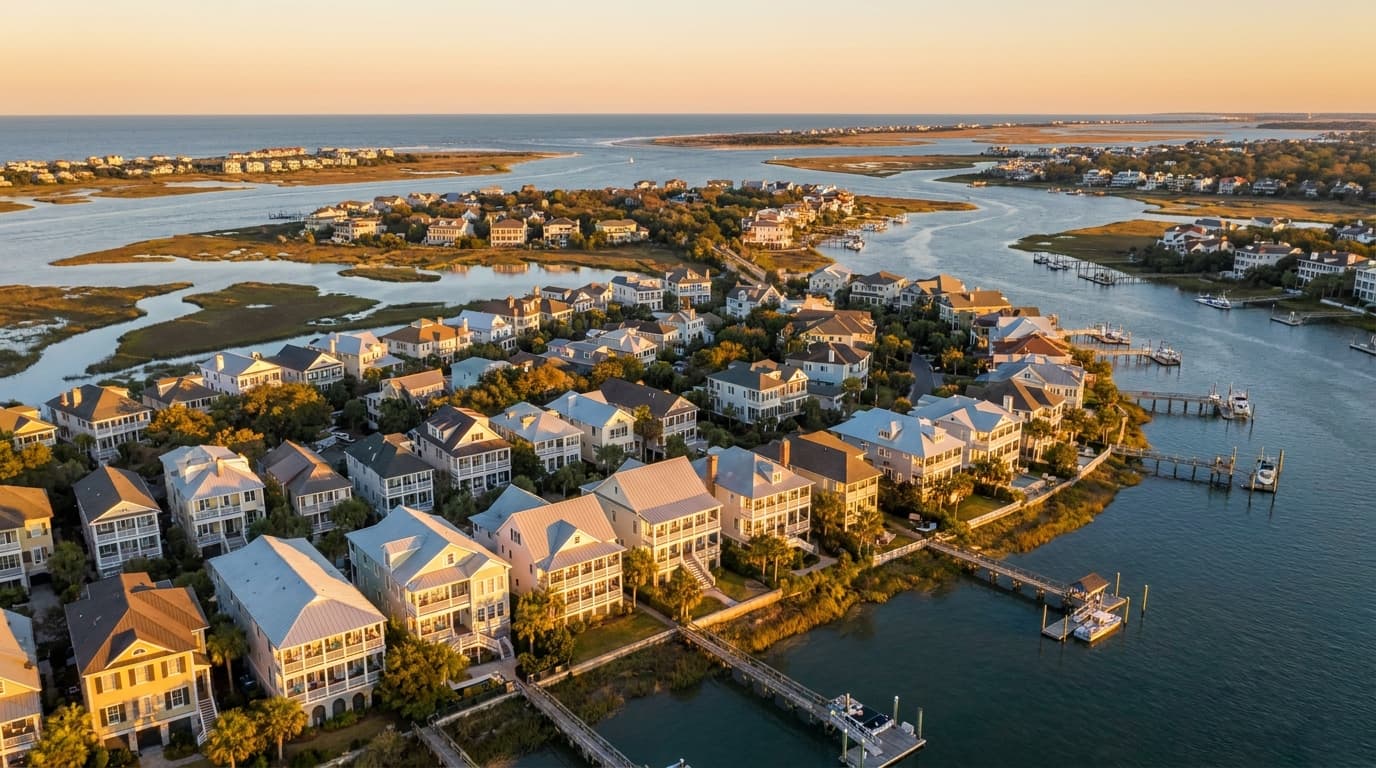
Running an Airbnb Charleston listing isn't just about having a pretty property. Charleston's market rewards hosts who understand the city's unique rhythms — from wedding season premiums to historic district regulations to the way tourists actually move through this walkable city.
After 12 years of hosting and managing 100+ properties, I've noticed the same patterns play out in charm-driven markets like this one. Hosts who capture the city's storytelling culture in their listings consistently outperform those who focus only on amenities. Here's how to optimize your Charleston STR for both search algorithms and Southern sensibilities.
Charleston Market and Regulatory Landscape
Charleston operates under a zoning-based STR system that varies dramatically by neighborhood. Properties south of Broad Street face the strictest regulations, while areas like West Ashley and James Island offer more flexibility for new hosts.
The regulatory sweet spot sits in the Upper Peninsula — roughly between Calhoun Street and the Ashley River. These neighborhoods allow STRs in most residential zones while still capturing that historic Charleston feel guests crave.
Business license requirements run about $50 annually, plus accommodations tax registration. The city caps STR permits in the historic peninsula, creating artificial scarcity that actually benefits existing hosts. If you're grandfathered in south of Broad, you're sitting on gold.
Market saturation varies by micro-neighborhood. King Street corridor sees heavy competition but also heavy foot traffic. The French Quarter commands premium rates but fights for visibility in a crowded field of listings. Ansonborough and Harleston Village offer the best balance — historic charm with less saturation.
Average daily rates range from $150-200 for standard properties to $400-600 for premium historic homes. Peak season runs March through November, with wedding season (April-June, September-October) driving the highest premiums.
Historic District Charm in Your Copy
Charleston guests don't just want a place to sleep — they want to feel connected to 300 years of history. Your listing description should read like a love letter to the city, not a real estate brochure.
Instead of "Beautiful historic home with original hardwood floors," try "Step through the same doorway where Charleston merchants welcomed ships from the Caribbean in the 1840s. Original heart pine floors still creak with stories of garden parties and ghost sightings."
Lead with the building's story, not your amenities list. Mentioning the year built in the first sentence gives guests an immediate reason to pick your property over an otherwise identical one. Charleston guests pay premium for authenticity, not granite countertops.
Use neighborhood-specific historical details. If you're in the French Quarter, mention the Huguenot heritage. Ansonborough properties should highlight the antebellum merchant history. Each Charleston neighborhood has distinct character — generic historic language won't cut it.
Reference architectural details guests can actually see. "Enjoy morning coffee on the original Charleston single house piazza" works because guests understand what a piazza is after walking the city. "Admire the earthquake bolts that saved this home in 1886" gives context for those metal stars on your building's facade.
Name-drop nearby landmarks in your descriptions. "Two blocks from Rainbow Row" carries more weight than "centrally located." Charleston tourists navigate by Instagram spots, not street addresses.
Food and Culture Proximity Messaging
Charleston's food scene drives bookings more than any other amenity. Guests plan entire trips around restaurant reservations at Husk, FIG, and The Ordinary. Your listing should position itself within this culinary ecosystem.
Don't just mention nearby restaurants — provide context for reservations. "Halls Chophouse is a 3-minute walk (book 30 days ahead)" helps guests actually plan their trip. "Leon's Oyster Shop next door for casual lunches (no reservations needed)" solves a practical problem.
Highlight walking distances to food clusters, not individual restaurants. "King Street restaurant row starts at your doorstep" tells guests they have options without you having to research every establishment. "Two blocks from the Charleston City Market food vendors" speaks to budget-conscious travelers.
Include seasonal food events in your area description. "Front porch perfect for Charleston Wine + Food Festival weekend in March" or "Walking distance to Lowcountry Oyster Festival grounds" connects your property to signature Charleston experiences.
For properties near the College of Charleston, mention student-friendly spots like Kudu Coffee and Fuel. Business travelers care more about proximity to Halls Chophouse and Fleet Landing. Know your guest personas and match food mentions accordingly.
Weekend breakfast options matter more than dinner reservations. Guests will research dinner extensively, but they need accessible coffee and brunch spots. "Callie's Hot Little Biscuit around the corner" solves morning hunger without requiring advance planning.
Wedding Season Pricing Optimization
Charleston hosts three distinct peak seasons: spring weddings (April-June), fall weddings (September-October), and summer tourism (July-August). Each requires different pricing strategies.
Wedding season premiums should run 40-60% above base rates. Minimum stay requirements become crucial — wedding parties book Thursday through Monday blocks consistently. Set 3-night minimums for spring weekends, 4-night minimiums for major wedding weekends like Derby Weekend in May.
Track local wedding venue calendars to predict demand spikes. The Ocean House, Lowndes Grove, and William Aiken House drive significant accommodation demand within 10-mile radii. Wedding parties pay premium for proximity to venues, not downtown attractions.
Price Thursday arrivals higher than Friday arrivals during wedding season. Wedding parties often arrive Thursday for rehearsal dinners, creating midweek demand you can capitalize on. Standard leisure travelers still prefer weekend-only stays.
Block your calendar strategically around major Charleston events. Spoleto Festival (late May-early June) fills the city with visitors over 17 days. Southern Living Food & Wine Festival, Charleston Fashion Week, and Charleston Marathon create predictable demand spikes worth premium pricing.
Consider wedding party-specific amenities in your listing. "Getting-ready space with full-length mirror" or "Bridal suite with natural lighting" attracts premium bookings from wedding parties willing to pay extra for convenience.
Southern Architectural Photography
Charleston's architectural photography needs tell a story, not just show a space. Guests book Charleston properties for the experience of staying in a historic Southern home — your photos should promise that experience.
Lead with exterior shots that establish architectural style. Single houses, double houses, and Charleston's famous "sideways" homes each tell different stories. Your cover photo should immediately communicate which Charleston architectural tradition guests will experience.
Capture piazzas from multiple angles. These covered side porches define Charleston living, but many hosts photograph them poorly. Show the view from the piazza toward the garden, the view from the garden toward the piazza, and the piazza furnished for actual use. Guests need to envision themselves in these spaces.
Include close-ups of architectural details that photographs well: wrought iron gates, gas lanterns, original shutters, heart pine floors with visible nail heads. These details separate authentic Charleston properties from generic vacation rentals.
Photograph rooms with historical context visible. A bedroom with visible ceiling medallions tells a different story than the same bedroom cropped to hide architectural details. Charleston guests pay for authenticity — show it.
Natural light timing matters more in Charleston than other markets. The city's famous golden hour light filtering through Spanish moss creates magical property photos, but only during specific times. Schedule photography sessions for late afternoon when that warm Southern light hits your property's best angles.
Include lifestyle shots that suggest Southern hospitality. A properly set table with sweet tea glasses, a front porch with traditional Charleston rockers, or a garden shot with camellias in bloom. These images sell the Charleston experience, not just the accommodation.
Weekday Business Travel Strategy
Charleston's corporate market gets overlooked by hosts chasing tourist dollars. Boeing, the Medical University of South Carolina, and the Charleston Naval Base generate consistent weekday demand that business-savvy hosts capitalize on.
Corporate travelers need different amenities than leisure guests. Dedicated workspace with ergonomic chair, reliable high-speed internet, and proximity to business districts matter more than historic charm. Market these features specifically in your listing.
Target North Charleston properties toward Boeing contractors and aviation industry professionals. These guests book 1-2 week stays, pay premium for convenience to the Boeing facility, and generate steady income during traditional slow periods.
Medical district properties serve MUSC visitors — patients' families, visiting doctors, medical conference attendees. These bookings often come with 7-30 day stays at corporate rates. Position your property as a temporary housing solution, not just vacation rental.
Price weekday stays strategically to capture business travel. Monday-Thursday rates can run 20-30% above weekend rates during conference seasons. Charleston hosts major medical conferences in January-February when tourism drops — perfect for corporate guest focus.
Include business-friendly policies in your listing. "Early check-in available for business travelers" or "Quiet workspace perfect for video calls" attracts corporate bookings. These guests often book last-minute but pay premium for convenience.
Restaurant recommendations should include business lunch spots and early dinner options. Corporate travelers eat differently than tourists — they need efficient meals near their work locations, not Instagram-worthy food experiences.
Target keywords shift for business travel optimization. "Charleston corporate housing" and "MUSC temporary lodging" capture different search intent than leisure tourism keywords. Consider separate listings or listing optimization for weekday corporate focus.
Charleston's vacation rental market rewards hosts who understand the city's unique culture and seasonal patterns. Generic optimization tactics won't capture the premiums this market offers to hosts who truly embrace Charleston's storytelling tradition.
Your listing competes against hundreds of other historic properties, wedding venues, and business accommodations. Success comes from positioning your specific property within Charleston's specific ecosystem — not just copying what works in other cities.
Need help tailoring these strategies to your exact Charleston property? Get a professional audit from STRAudits. Our $49 audit includes Charleston market analysis, neighborhood-specific recommendations, and optimization strategies based on your property's unique location and features. Delivered in 48 hours with actionable steps you can implement immediately.